
 Completed
Promoting Safe and Child-Friendly Learning Spaces for Psychosocial Support
Promoting Safe and Child-Friendly Learning Spaces for Psychosocial Support
JASMAR Human Security Organization in partnership with UNICEF
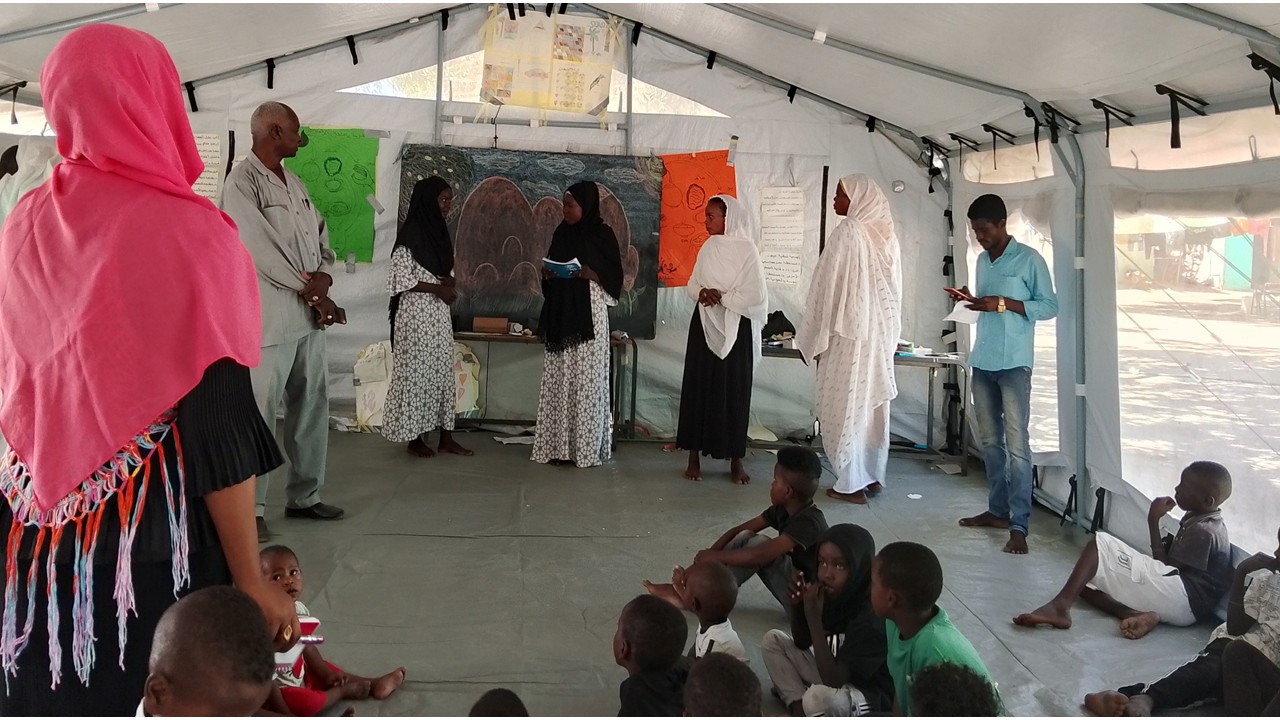
The project aimed to provide safe, inclusive, and child-friendly learning environments for children affected by the conflict in Sudan, particularly internally displaced children in White Nile State. Through the establishment and support of Safe Learning Spaces (SLS), the project promoted access to learning, psychosocial support, child protection, life skills development, and community engagement. It also supported hygiene promotion and community-based water, sanitation, and hygiene (WASH) initiatives in collaboration with relevant government institutions and local communities.
Key Achievements
Establishment and Support of Safe Learning Spaces
• Safe Learning Spaces: Selected 20 IDP centres across Kosti, Rabak, Ad-Dueim, and Al-Jabalain localities and equipped them with 20 tents to provide safe learning environments for displaced children.
• Learning space identification: Installed 20 signboards to identify and improve the visibility of the targeted Safe Learning Spaces.
• Learning furniture: Provided 20 iron desks and 20 iron office cupboards to support learning and the management of the 20 SLS.
• Facilitator incentives: Provided four months of incentives to 15 facilitators working in five SLS, and two months of incentives to 45 facilitators in 15 SLS.
• Education supervisor incentives: Provided two months of incentives to 20 Ministry of Education supervisors supporting the 20 SLS.
School Enrolment and Learning Materials
• Enrolment campaigns: Registered 5,794 internally displaced children of early childhood and primary-school age in the 20 SLS through enrolment campaigns and community awareness activities.
• Student learning kits: Distributed 5,647 Arabic student kits to support children's access to essential learning materials.
• Teacher kits: Distributed 25 Arabic teacher kits to support teaching and classroom activities.
• Adolescent learning kits: Distributed 21 adolescent kits to support learning and development activities.
• Early childhood development materials: Provided 20 early childhood development kits to support age-appropriate learning and development.
• Psychosocial support materials: Distributed 40 psychosocial support materials to strengthen structured activities for children across the SLS.
• Better Learning Programme manuals: Provided 40 NRC Better Learning Programme (BLP) manuals to support facilitators in delivering learning and psychosocial support activities.
• Recreational materials: Distributed 39 recreation kits to encourage play, interaction, and positive engagement among children.
Capacity Building for Facilitators and Supervisors
• Learning facilitation and SLS management: Trained 60 Safe Learning Facilitators on learning facilitation, the Better Learning Programme manual, life skills, and Safe Learning Space management.
• Child protection and psychosocial support: Trained 60 facilitators on child protection and psychosocial support (CP/PSS) to strengthen their ability to support children attending the 20 SLS.
Psychosocial Support, Child Protection, and Community Engagement
• Community awareness sessions: Conducted 60 awareness sessions across the 20 SLS, reaching communities with information on psychosocial support, child protection, and gender-based violence (GBV).
• Community drama sessions: Conducted 20 drama sessions to engage parents, adolescents, and community members in understanding the project's objectives and promoting child-friendly learning environments.
• Adolescent-led child-friendly clubs: Trained 40 adolescents to support the establishment and functioning of 20 child-friendly clubs led by adolescents in the SLS.
• Life skills and citizenship education: Built the capacity of 40 adolescents and young volunteers in life skills and citizenship education, including the Convention on the Rights of the Child (CRC).
• Life skills awareness: Supported 20 trained young volunteers to conduct 40 awareness sessions on life skills and citizenship education across the 20 SLS.
• Social cohesion: Trained 60 young volunteers in social cohesion approaches to support positive relationships within IDP camps and host communities.
Handwashing Facilities and Hygiene Promotion
• Handwashing facilities: Distributed 100 handwashing facilities in Kosti, Rabak, and Al-Jabalain localities, including 70 in Kosti and Rabak and 30 in Al-Jabalain. In Al-Jabalain, 18 facilities were allocated to Safe Learning Spaces and 12 to a community service centre.
• Handwashing support for centres: Delivered 100 handwashing facilities to 21 IDP Safe Learning Spaces and three community centres across Kosti, Rabak, and Al-Jabalain.
• Hygiene awareness: Conducted 30 awareness sessions in targeted communities in Al-Jabalain, in collaboration with the Ministry of Health and the Ministry of Social Welfare, promoting the use of handwashing facilities and improved hygiene practices.
• Community WASH committees: Trained 60 community members over three days to strengthen community participation in water and sanitation services.
• WASH committee formation: Supported the formation and activation of WASH committees in six areas of Al-Jabalain Locality: Hai Al-Jabal, Al-Hilla Al-Jadida, Al-Kasara, Al-Sabha, Al-Shati Janoub, and Al-Shati Shamal.
• Cleaning equipment: Provided each of the six WASH committees with 10 rakes, 10 hoes, 10 dirt baskets, and five wheelbarrows to support community cleaning and environmental hygiene activities.
Development of the SDG 6 Plan in Tandalti Locality
JASMAR, in collaboration with the Ministry of Health, its Environmental Health Department, the Water and Environmental Sanitation (WES) sector, and local authorities, supported the development of a plan aligned with Sustainable Development Goal 6 on clean water and sanitation. The process included two stakeholder workshops: a state-level workshop attended by 43 representatives of government institutions, international NGOs, and national NGOs, and a locality-level workshop attended by 25 community leaders and locality administration representatives. These consultations addressed water services, environmental hygiene, and primary data collection. JASMAR also supported the preparation of data collection teams, their training on data collection tools and responsibilities, and the collection and analysis of relevant information. A final workshop attended by 32 representatives of local authorities and humanitarian organizations reviewed the analysed findings to inform the development plan. To strengthen local institutional capacity and support implementation, JASMAR provided the Environmental Health Department and WES sector in Tandalti with two laptops, two chairs, and two tables. The process emphasized the importance of sharing collected data with relevant organizations and WES, strengthening government and community engagement, and mobilizing the support needed to advance the plan.
Impact
The project expanded access to safe learning environments for conflict-affected and displaced children in White Nile State, strengthened facilitators' capacity to deliver learning and psychosocial support, and promoted child protection, life skills, and adolescent participation. It also improved access to learning materials and handwashing facilities while strengthening community engagement in hygiene promotion and supporting local institutions and committees in water, sanitation, and environmental health planning.
Education in Emergency Response – White Nile State
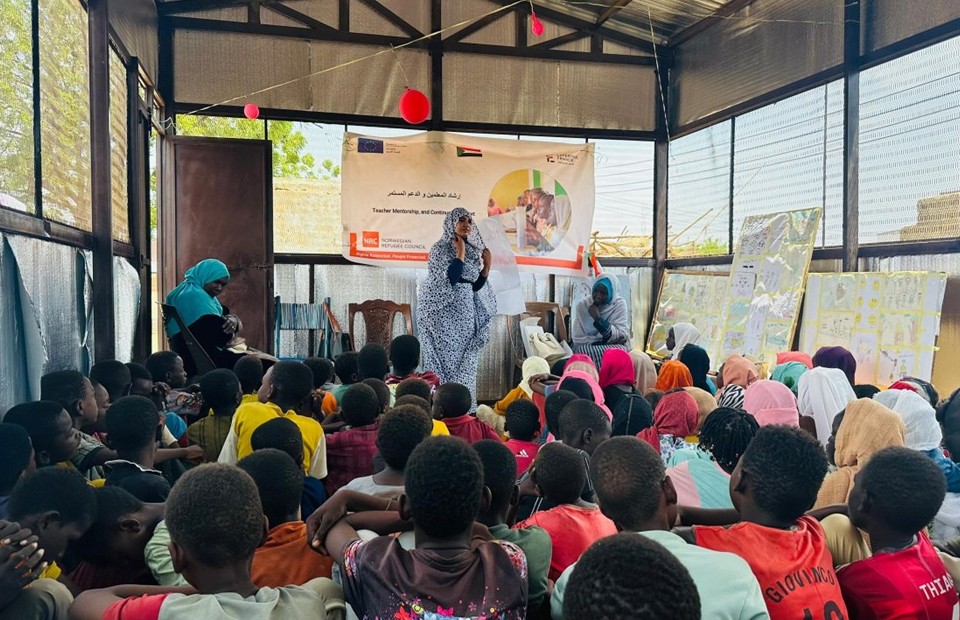
JASMAR Human Security Organization, in partnership with the Norwegian Refugee Council (NRC) and in collaboration with the Ministry of Education (MOE), implement...

Provision of psycho-social support, educational and recreational activities
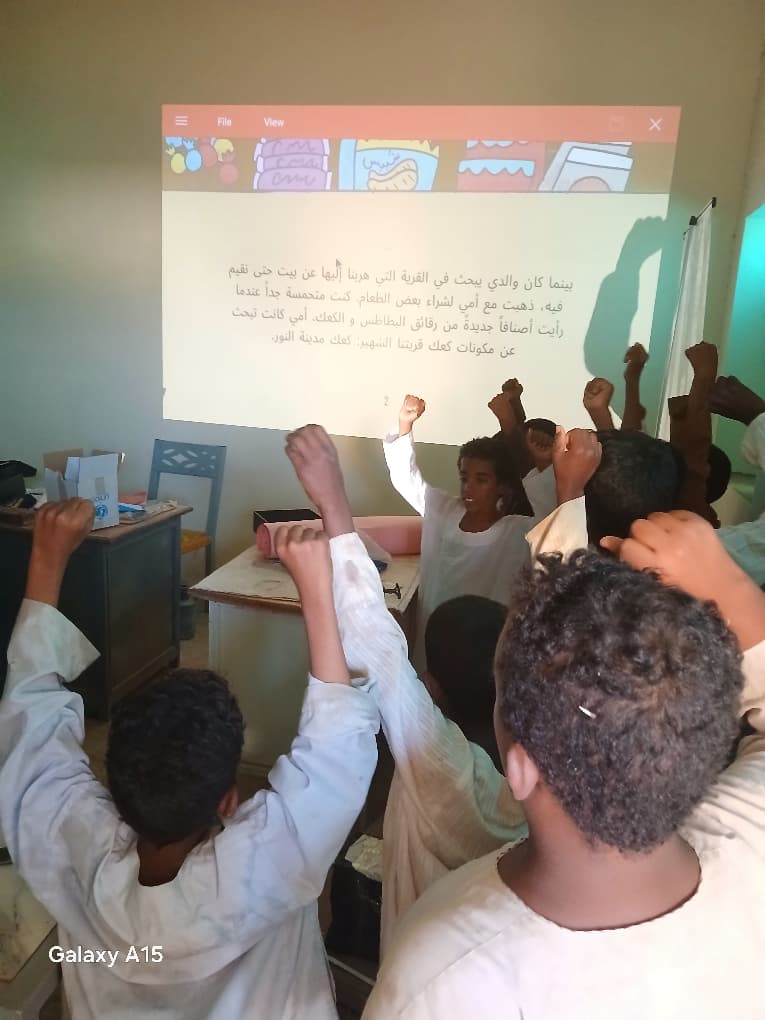
✅ Donor: UNICEF📅 Duration: September 1, 2023 – February 29, 2024📍 Geographical Coverage: Kassala State (Halfa El Jadeeda, Kassala, and Khashm Ghirba localiti...
Interested in supporting this project?
Join JASMAR and help us work for human prosperity and dignity across Sudan.